The Most Expensive Artworks Ever Sold, and Why No NFT Has Come Close Since 2021
The real ranking of the most expensive paintings ever sold, updated with Warhol's record 2022 sale — and why the NFT market never caught up like everyone expected.
By Joseph White
Published Sep 3, 2026
Back in 2022, digital art seemed to be closing the gap on traditional painting fast — a single NFT had already sold for $91.8 million, within striking distance of the world's priciest paintings. Four years on, that gap hasn't closed. It's actually widened. Here's the current picture, and the honest reason why.
The Most Expensive Paintings Ever Sold
1. Salvator Mundi by Leonardo da Vinci — $450.3 million (2017)
Still the record, and it's not close. Christie's sold the painting after a 19-minute bidding war to a buyer later identified as Saudi Crown Prince Mohammed bin Salman. It remains the only Da Vinci painting in private hands — and its current location is still one of the art world's open questions. It hasn't been publicly exhibited since the sale; it's widely reported to be stored, possibly aboard a yacht linked to the Saudi royal family, though this has never been officially confirmed. If you're looking for where to go see it, the honest answer is: nobody outside a very small circle actually knows.
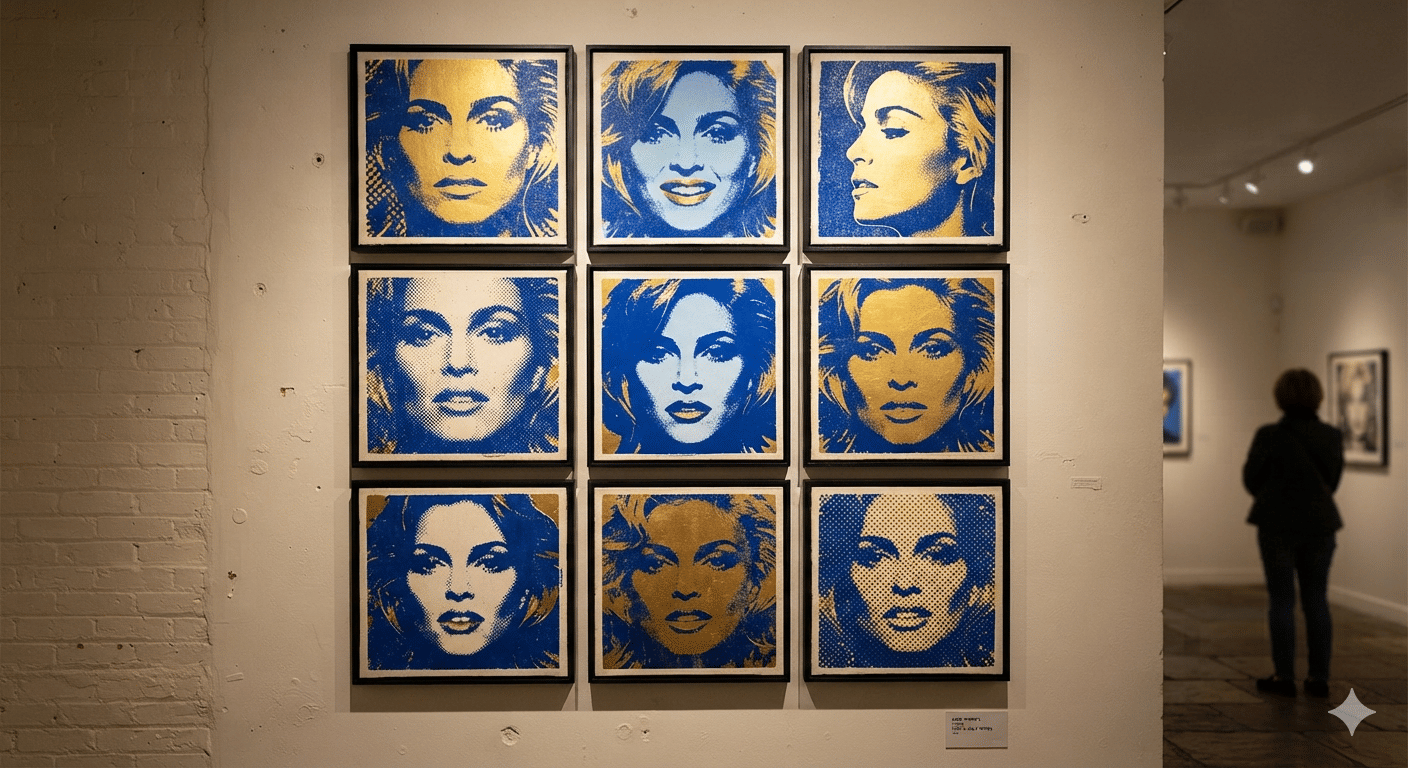
2. Shot Sage Blue Marilyn by Andy Warhol — $195 million (2022)
This is the most significant update to this list since it was last widely covered. Christie's sold the piece in May 2022, just weeks after this topic first made headlines as an upcoming sale. It set the record for the most expensive 20th-century artwork and the most expensive work by an American artist ever sold at auction, bought by dealer Larry Gagosian after under four minutes of bidding. Proceeds went to the Thomas and Doris Ammann Foundation, a children's charity.
3. Interchange by Willem de Kooning — $300 million (2015)
Hedge fund manager Kenneth Griffin bought this Abstract Expressionist piece the same day he bought the Jackson Pollock further down this list — a combined $500 million spent in a single private sale.
4. The Card Players by Paul Cézanne — $250 million (2012)
Purchased by Qatar's royal family, one of five versions of the same card-game scene; the other four hang in museums.
5. Nafea Faa Ipoipo? by Paul Gauguin — $210 million (2015)
The buyer of this Tahiti scene has never been officially confirmed, though it's widely believed to be connected to Qatar's royal family.
6. Number 17A by Jackson Pollock — $200 million (2015)
The second half of Kenneth Griffin's single-day, half-billion-dollar art shopping trip.
No sale since 2017 has come close to unseating Salvator Mundi, and no painting sale since 2022 has cracked this top six — which tells you something about how rare truly record-breaking art sales actually are, regardless of what the NFT market suggested was coming.
Where NFTs Actually Stand Now
In early 2022, the NFT market was still climbing, and it was reasonable to assume the top NFT sale price would keep chasing the art world's biggest numbers. That didn't happen.

1. The Merge by Pak — $91.8 million (December 2021)
Nearly 29,000 collectors pooled together to buy fractional "mass" units of a single work — still the largest sum ever paid for a publicly sold artwork by a living artist, and still the all-time NFT record more than four years later.
2. Everydays: The First 5000 Days by Beeple — $69.3 million (March 2021)
The Christie's sale that effectively created mainstream awareness of NFTs as a collectible category. Still the second-highest NFT sale ever recorded.
3. Clock by Pak and Julian Assange — $52.7 million (February 2022)
Funded by more than 10,000 pooled donors under the name AssangeDAO, with proceeds directed toward Assange's legal defense.
Both of the top two NFT records are now four to five years old — a long stretch of stagnation for a market that was widely predicted to keep setting new highs. NFT trading volume fell roughly 63% year-over-year in the first quarter of 2025 alone, and by most measures 2025 closed out as a continuation of the broader multi-year decline rather than a recovery. There have been pockets of renewed activity — a single CryptoPunk sold for just over $12 million in October 2025, and a celebrity-branded NFT drop briefly did over $12 million in sales in under 30 minutes that July — but nothing in years has approached the scale of the 2021-22 peak sales.
The Real Story Here
The 2022 framing — that digital art was on a trajectory to rival physical masterpieces — turned out to be a peak, not a trend. Physical art at the very top end has kept setting records roughly once every several years, driven by scarcity that can never be replicated (there is exactly one Salvator Mundi). NFTs, it turned out, didn't have the same kind of scarcity story once speculative trading cooled, and the category's ceiling has stayed essentially fixed since the end of 2021. If you're comparing the two markets today, the honest takeaway isn't "NFTs are catching up" — it's that they hit a wall four years ago and haven't moved since.
Write a comment
Comments
David Williams 680324
Oct 3, 2026Sudah dua kali saya baca ulang dan tetap relevan. Bagian tentang domain expired yang masih menyimpan otoritas benar-benar masuk akal, dan strategi anchor textnya praktis banget untuk dipraktikkan. Saya setuju konsistensi lebih penting daripada jumlah. Link referensi di bagian bawah juga lengkap, saya simpan untuk bahan belajar. Terima kasih sudah berbagi! <a href="https://jasapbn-id-04qfcd.pages.dev" rel="dofollow" target="_blank">jasa pbn</a> David Williams 680324
Emma Jones 643347
Oct 3, 2026Artikelnya sangat jelas dan membantu, terutama bagian strategi anchor text dan cara memilih domain PBN yang berkualitas. Terima kasih sudah berbagi! <a href="https://jasapbn-id-04qfcd.pages.dev" rel="dofollow" target="_blank">jasa pbn</a> Emma Jones 643347
Olivia Williams 624829
Oct 4, 2026Great breakdown of PBN link building for competitive niches. The section on anchor diversity and checking domain history was really useful. Thanks for sharing! <a href="https://highdapbnlinks-6expdn.pages.dev" rel="dofollow" target="_blank">high da pbn links</a> Olivia Williams 624829
John Jones 661940
Oct 4, 2026Bookmarked this one. The part about expired domains still carrying years of authority explains a lot about why my older niches moved faster than new sites ever did. The anchor mixing advice is spot on too — I burned a site years ago by going exact-match on everything. The resource list at the bottom is gold, working through it now. Thanks for putting this together! <a href="https://highdapbnlinks-6expdn.pages.dev" rel="dofollow" target="_blank">high da pbn links</a> John Jones 661940